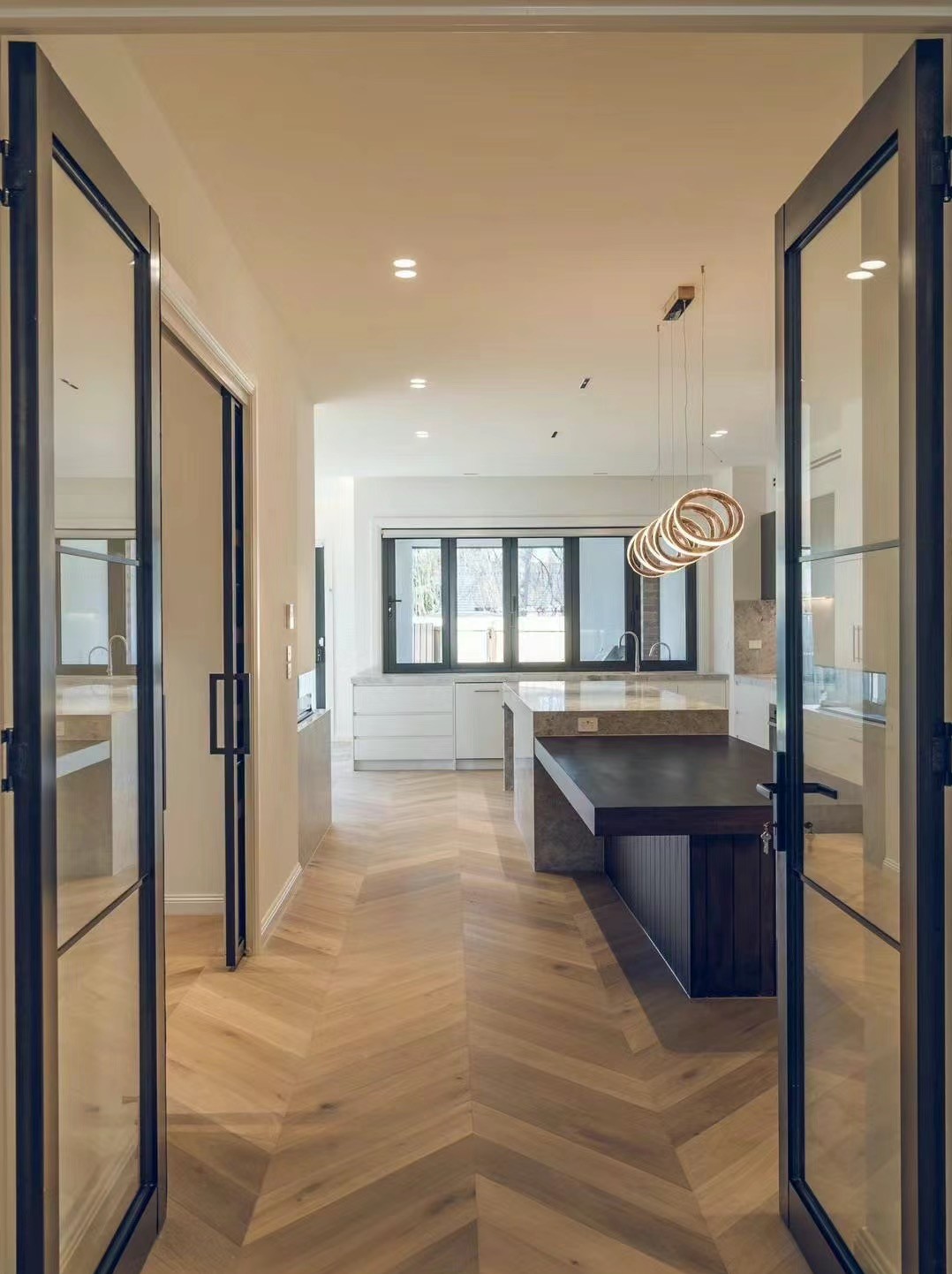
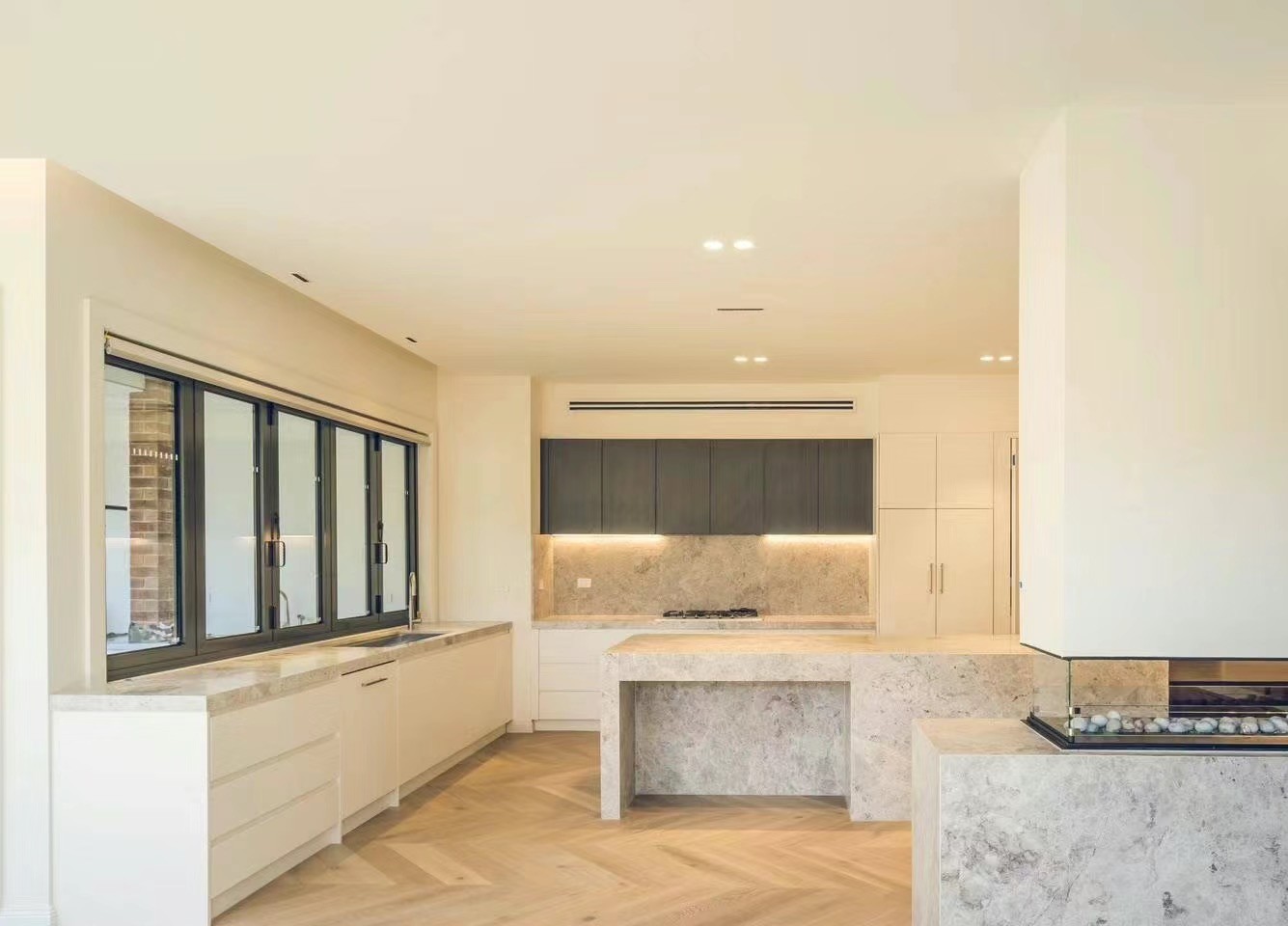
Key takeaways
What to know before you begin.
- Confirm appliances, cabinetry and service requirements before manufacture.
- Allow for product lead times before demolition begins.
- Understand when site dimensions and stone templates are required.
- Plan temporary cooking and access arrangements in advance.
Brief, measure and identify constraints
The first stage records the existing room, services, access and the way your household uses the kitchen. Priorities may include storage, circulation, seating, appliance capacity or connection to adjacent living areas.
Existing walls, windows, plumbing, electrical capacity and ventilation should be considered before a preferred layout is treated as final.
Develop the layout and selections
Cabinetry, appliances, benchtops, splashbacks, tapware, lighting and flooring affect one another. Appliance specifications influence cabinet openings and service locations, while benchtop and splashback decisions affect templates and installation sequencing.
- Approve the cabinetry layout and internal storage
- Confirm appliance models and installation requirements
- Select benchtops, splashbacks, handles and tapware
- Coordinate lighting, power, plumbing and ventilation
Order long-lead items
Custom cabinetry, appliances, specialist fixtures and some finishes can have significant lead times. A construction start should be coordinated with realistic delivery information rather than an optimistic estimate.
Confirm who is ordering each item, where it will be delivered and who checks it before installation.
Demolition and rough-in
Once the existing kitchen is removed, the site can be checked against the plan. Plumbing, electrical and other services are then positioned for the approved layout, with any required framing or wall preparation completed before cabinetry installation.
Cabinetry, surfaces and fit-off
Cabinetry is installed and checked before final surfaces and trade fit-off. Some stone benchtops require site templating after cabinets are fixed, creating a planned interval before installation.
Appliances, tapware, lighting and power are connected during fit-off, followed by finishing, testing, cleaning and a final walkthrough.